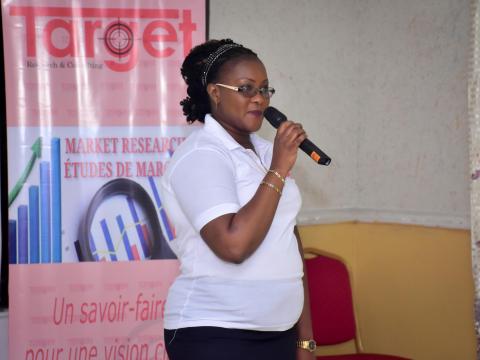
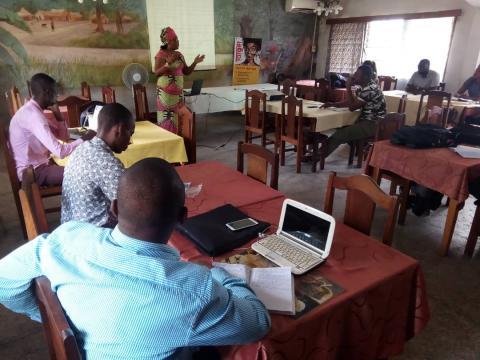
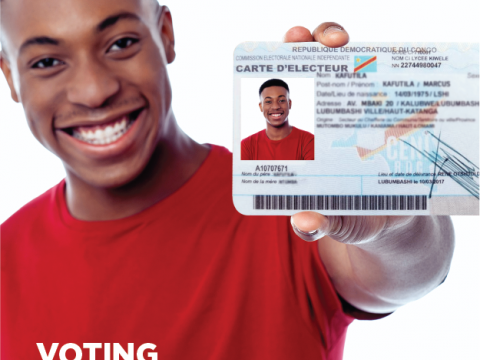
Target conducted a survey at the second quarterly of 2018 on voting intentions related to elections of next December.



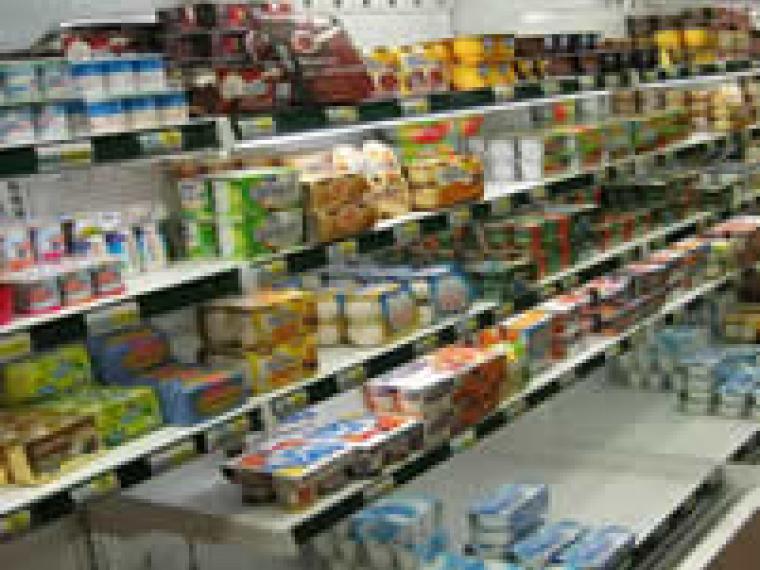
Consumption Indexes of Kinshasa Products (2nd Edition)

In October 2011, TARGET published the first consumption indexes of products at Kinshasa related to about twenty products in order to allow investors, contractors and natural persons (students, researchers…) having an idea on the importance that Congolese consumers in general and Kinshasa consumers in particular grant to any product that is available on the market. By product, we mean as well tangibles (soap, shoes, cleansing milk…) as services such as large distribution, mobile telephony and internet.
Two years later, TARGET is back this time with the following innovations:
- A larger list of products, considering the increasing use of new technologies and launching of new products in Kinshasa market (laptop computers, credit/debit cards, tablets, cash dispensers/ATM and money transfer).
- For each product, the emphasis is now laid on identifying brands (in the event of goods) or providers (in the event of services) that are mostly used and preferred.
Results of this research come from an opinion survey carried out in Kinshasa from 11 to 13 January 2013 towards a sample of 1000 people in line with the method of quota for age, sex and residence municipality. Figures published are only related to use of products, and not to their possession. As a matter of fact, a person can for example use bank services (deposits, withdrawals, transfer…) without necessarily owning a bank account. This is the same for a user of vehicle or laptop computer that would not necessarily use his/her own possession.
This research covers 3 big parts: the first relates to generalities on use rates of different products, use frequency and details on use profile according to sex, age, profession and living district. The second part reveals statistics on the most use brands or companies and the third is dedicated to Kinshasa people preferences.
The products mostly use by almost all Kinshasa people are: soap (96%), soft drinks/BG (94%), vehicle (94%), cleansing milk (90%), TV set (89%) and mobile phone (89%). On the other hand debit/credit card (9%), cash dispensers/ATM (8%) and tablets (7%) are recording the lowest rates.
Soap, vehicle, cleansing milk, TV set and mobile phone are found again amongst daily use products. On the other hand, soft drinks have a weekly use frequency following the example of beer, shoes and internet. Money transfer (sending/receiving), hotel business, bank and aviation are mostly used on a monthly basis.


To obtain the integrality of Kinshasa products’ consumption indexes’ survey, please contact us through email (info@target-sprl.cd) or through telephone (+243 99 324 8180 or +243 045 1052).
Friday, May 31, 2013 - 09:21

Post date: Sun, 12/23/2018 - 23:00
Post date: Sun, 12/23/2018 - 22:55
It is since several decades that environmental issues are raised in international forums and conferences.
Post date: Sun, 12/23/2018 - 22:41
During the first semester 2018, we capitalized these assets with capacity building of our teams and purchasing of software and tools to make our job more com
Post date: Thu, 10/11/2018 - 21:55
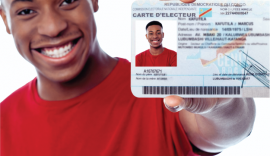
Target conducted a survey at the second quarterly of 2018 on voting intentions related to elections of next December.
Post date: Thu, 10/11/2018 - 21:49
DR Congo is a huge market at the heart of Africa with 78.74 million of inhabitants. It holds a very strategic position in the region.
Post date: Thu, 10/11/2018 - 21:44
It is since several decades that environmental issues are raised in international forums and conferences.

Post date: Sat, 08/25/2018 - 10:58
DRC remains a dominated by Christian. A study conducted by Target research in May 2018 reveals that 93% of Congolese are Christian.
Post date: Sat, 08/25/2018 - 10:28
In 2017, Target published the first edition of ‘’media audience in DRC’’ which consisted in giving an overview of media landscape in each of 26 DRC regions a

Post date: Fri, 04/06/2018 - 12:48

Post date: Thu, 12/21/2017 - 21:32
During this recent years, DRC was victim of Ebola (2017, 2014, 2012, 2008-2009, 2007,…).